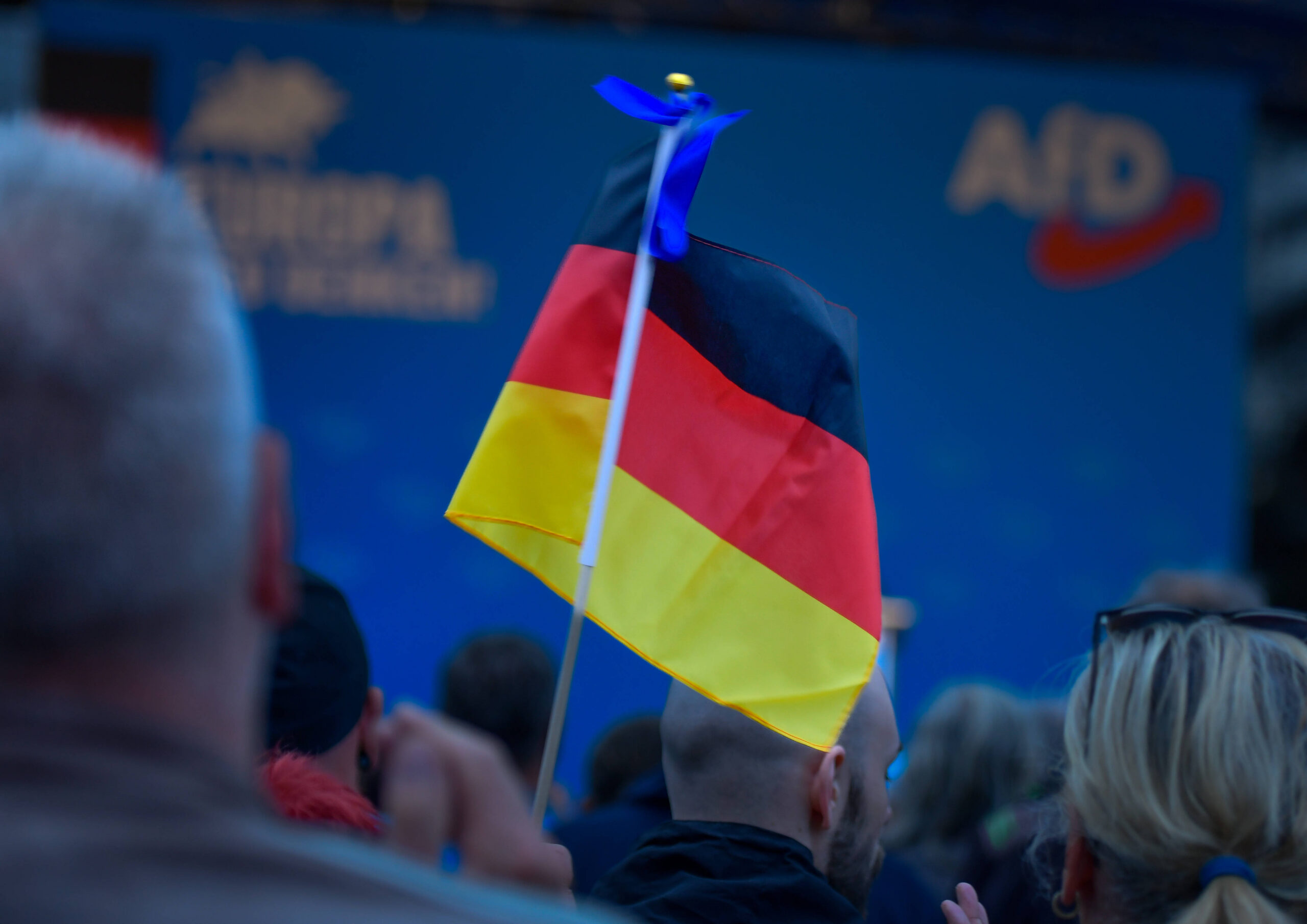
Germany's Political Landscape Transforms: Far-Right AfD Rises to Second Strongest Party
In a significant and unsettling shift for the heart of Europe, the far-right Alternative for Germany (AfD) party has ascended to an unprecedented position, emerging as the nation's second-strongest political force. This pivotal moment, confirmed by the latest Deutschlandtrend poll from public broadcaster ARD, sees the AfD decisively overtake the Social Democrats (SPD), traditionally one of Germany's two dominant parties and currently the junior partner in the ruling grand coalition. This development marks a profound reconfiguration of German politics, signaling deep-seated discontent and raising critical questions about the country's future direction.
The poll results paint a stark picture: the AfD climbed two percentage points since the previous survey, reaching 18% voter popularity. This places them just one point ahead of the SPD, which concurrently lost a point, falling to 17%. Chancellor Angela Merkel's conservative CDU/CSU bloc, while still holding the lead, also experienced a dip, sliding one point to 28%. This 28% represents the conservatives' lowest polling result since the Deutschlandtrend survey began in 1997, underscoring a broader disillusionment with the established political order. Other parties, including the environmentalist Greens (up to 15%) and the business-friendly Free Democrats (FDP, up to 9%), also saw gains, indicating a fragmentation of voter loyalty beyond the traditional mainstays. The Left party held steady at 10%.
Decoding the AfD's Ascent: Immigration, Discontent, and Populist Appeal
The AfD's meteoric rise from its founding in 2013 on an anti-euro platform to now holding the afd platz zwei in national polls is a testament to its successful transformation into a full-fledged far-right, anti-immigration party. Almost exactly a year prior to this poll, the AfD made history by entering the national parliament for the first time, securing 12.6% of the vote and becoming the third-strongest force. Their current surge to second place, surpassing a traditional heavyweight like the SPD, reflects a growing segment of the German electorate feeling disenfranchised by mainstream politics.
Several factors contribute to this phenomenon:
- Immigration Policy Backlash: The AfD has masterfully capitalized on anxieties surrounding Germany's immigration policies, particularly after the influx of refugees in 2015. Their hardline stance, advocating for stricter border controls and a more restrictive approach to asylum, resonates with voters who feel their concerns about integration, security, and cultural identity have been ignored by the centrist parties.
- Anti-Establishment Sentiment: Many voters view the AfD as an authentic alternative to what they perceive as an increasingly out-of-touch political establishment. The party's rhetoric, often critical of the "elite" and the "system," taps into a broader populist wave seen across Europe and beyond.
- Perceived Coalition Weakness: The ongoing internal squabbles within the CDU/CSU-SPD grand coalition have projected an image of disunity and ineffectiveness. Voters, observing constant bickering over key policies, may be seeking a more decisive and unified political voice, even if it comes from the fringes.
- Economic Anxieties: While Germany's economy remains robust, underlying economic anxieties, coupled with regional disparities and concerns about the cost of living, can drive voters towards parties promising radical change or protectionist measures.
The AfD's communicative strategy, often employing provocative language and leveraging social media effectively, has also played a crucial role in amplifying its message and mobilizing support. This approach, while drawing widespread criticism for echoing sentiments reminiscent of Germany's darker historical periods, clearly finds traction among a significant portion of the electorate.
Grand Coalition Under Strain: Internal Rifts and Public Fallout
The AfD's ascent to afd platz zwei is not occurring in a vacuum; it is deeply intertwined with the escalating internal conflicts plaguing Germany's ruling grand coalition. Recent disputes, particularly the controversy surrounding domestic spy chief Hans-Georg Maassen, have laid bare "apparently irreconcilable divisions" within the government.
Maassen, accused by many of sympathizing with far-right ideology, was controversially removed from his position as head of the domestic intelligence agency, the BfV. However, instead of a clear dismissal, he was promoted to a higher-paid role within the Interior Ministry. This "solution," widely criticized as an attempt to placate hardliners within the government while appearing to address public outcry, backfired spectacularly. It failed to allay rifts within the coalition, especially concerning immigration policy, and further eroded public trust in the government's ability to govern cohesively.
Interior Minister Horst Seehofer, leader of Bavaria's Christian Social Union (CSU) and a staunch proponent of stricter immigration policies, found himself under immense pressure. His unconditional support for Maassen, coupled with his persistent advocacy for a rightward shift in government policy to win back voters from the AfD, appears to have backfired personally. The Deutschlandtrend poll revealed a dramatic drop in Seehofer's approval ratings, with only 28% of voters considering him fit for his post, down from 39% just months prior. Even within his own conservative bloc, his approval plummeted from 45% to a mere 31%, highlighting the profound dissatisfaction even among traditional supporters.
This internal turmoil, playing out in public, has undoubtedly contributed to the broader voter disillusionment that the AfD has expertly capitalized on. The perception of a government too busy fighting itself to address the nation's challenges creates a fertile ground for populist alternatives.
The Road Ahead: Implications for Germany and Europe
The AfD's emergence as Germany's second-strongest party carries profound implications, not just for domestic German politics but for the broader European landscape. Germany, traditionally a beacon of stability and centrist politics, is now grappling with a significantly strengthened far-right presence. This shift could lead to:
- Further Polarization: The rise of the AfD is likely to intensify the political discourse, pushing other parties to define themselves more sharply against its populist and nationalist agenda. This could make consensus-building and coalition formation even more challenging in future elections.
- Policy Shifts: Even if the AfD remains outside of direct governance, its strong polling position will exert pressure on mainstream parties, particularly on issues like immigration, security, and national sovereignty. We may see an continued toughening of stances from established parties in an attempt to stem the flow of voters to the AfD.
- Impact on European Union: Germany plays a pivotal role in the European Union. A domestically fractured Germany, with a powerful anti-EU, nationalist voice, could complicate EU decision-making and potentially embolden similar populist movements across the continent.
- Challenges for Mainstream Parties: The CDU/CSU and SPD face an existential crisis. They must critically re-evaluate their strategies, address voter concerns effectively, and present a compelling vision for Germany's future if they are to regain lost ground and counter the AfD's appeal. This involves not only policy adjustments but also a renewed focus on effective communication and internal cohesion.
It's also worth noting that while the AfD's national popularity is soaring, its regional successes can be more varied. For instance, the AfD Schleswig-Holstein state chapter, which saw initial success in entering the state parliament in 2017 with Jörg Nobis as lead candidate, faced internal struggles, including the expulsion of former chair Doris von Sayn-Wittgenstein, and ultimately failed to clear the 5% hurdle in the 2022 state election, leaving them unrepresented in that particular state parliament as of 2024. This serves as a reminder that national trends, while powerful, do not always translate uniformly across all regional contexts, and internal party dynamics remain crucial.
Navigating a New Political Reality: What Lies Ahead?
The rise of the AfD to second strongest party is not merely a statistical anomaly; it is a symptom of deeper anxieties and discontent within German society. Mainstream parties must confront the fundamental questions being posed by voters turning to the far-right. This requires more than just policy adjustments; it demands a comprehensive strategy to rebuild trust, foster national unity, and articulate a clear vision that addresses the concerns of all citizens, including those who feel left behind or unheard.
The political landscape in Germany has unequivocally transformed. The era of predictable grand coalitions and stable centrist dominance appears to be giving way to a more fragmented, polarized, and uncertain future. How Germany's established political forces respond to this challenge will not only shape the country's destiny but will also have significant reverberations across Europe and the wider world.