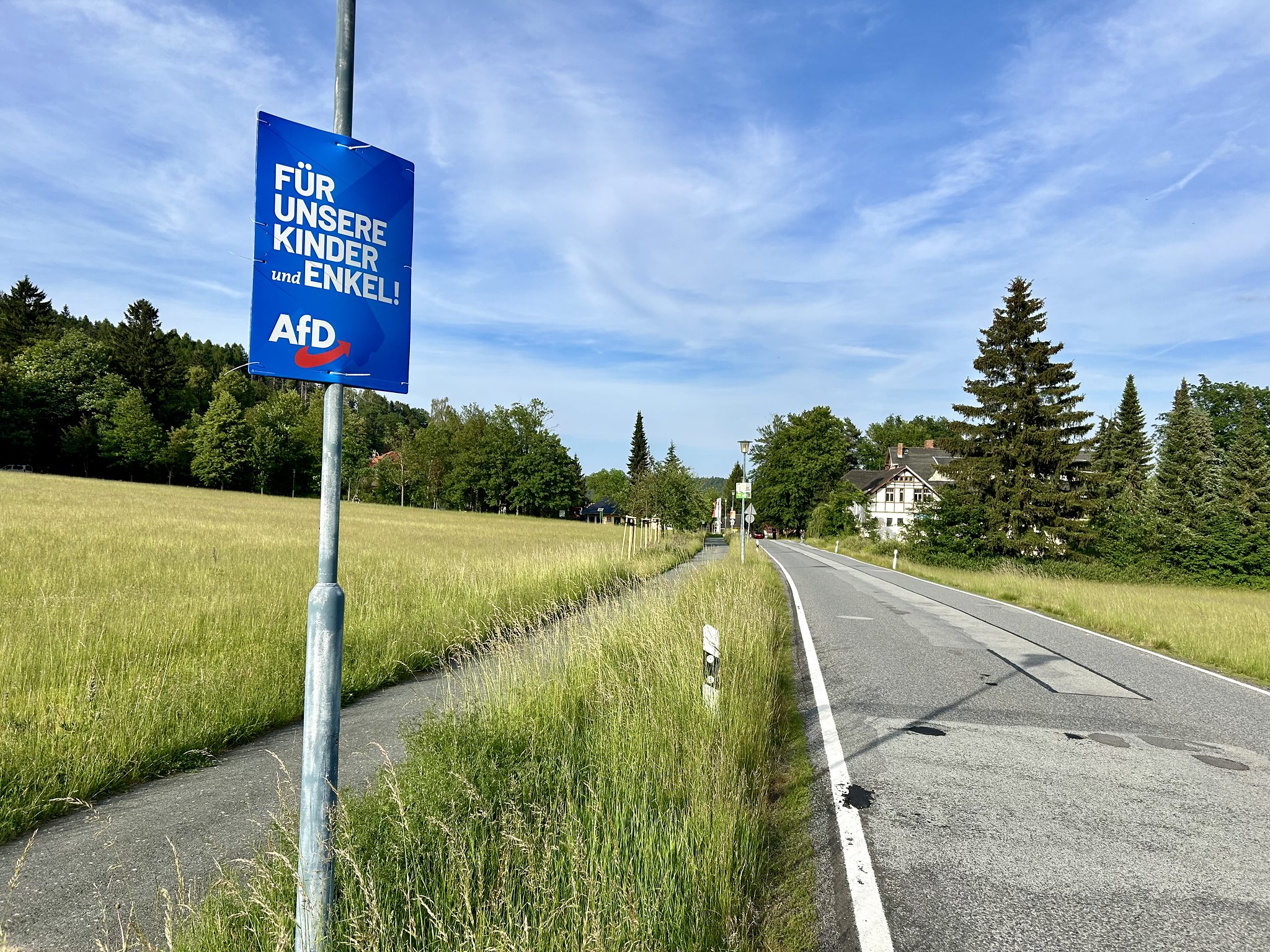
The Shifting Sands of German Politics: AfD's Ascent to Second Place and the Immigration Debate
Germany's political landscape is undergoing a profound transformation, with the Alternative for Germany (AfD) party making significant strides, recently securing a remarkable second place in national voter popularity polls. This unprecedented rise, placing the AfD ahead of the long-established Social Democrats (SPD), signals a seismic shift in voter sentiment and intensifies the already heated debate surrounding immigration policy. The implications of this far-right AfD's second place position are far-reaching, challenging traditional party structures and forcing mainstream political forces to re-evaluate their strategies in an increasingly polarized environment.
According to the influential Deutschlandtrend poll by public broadcaster ARD, the AfD climbed two percentage points, reaching an impressive 18%. This places them a crucial point ahead of the SPD, which saw its support dip. Even Chancellor Angela Merkel's conservative CDU/CSU bloc, while still leading, recorded its worst result since the poll's inception in 1997, dropping to 28%. This data paints a clear picture: German voters are expressing growing dissatisfaction with the traditional governing parties, and the AfD, despite its controversial rhetoric, is successfully capitalizing on this disillusionment.
From Anti-Euro Origins to an Anti-Immigration Powerhouse
The AfD's journey to becoming a formidable force in German politics is a fascinating case study in political evolution. Launched in 2013 primarily on an anti-euro platform, the party initially attracted a diverse base of economic conservatives and academics critical of the Eurozone's bailout policies. However, as the refugee crisis intensified from 2015 onwards, the party strategically pivoted, adopting a staunch anti-immigration stance that quickly became its defining characteristic. This shift resonated with a segment of the German electorate feeling disenfranchised or concerned about the pace of societal change and the integration of new arrivals.
The AfD's entry into the national parliament in 2017, securing 12.6% of the vote as the third-strongest force, marked a pivotal moment. It demonstrated that the party was no longer a fringe movement but a permanent fixture on the political stage. Its subsequent climb to the AfD's second place in polls, just a year after entering the Bundestag, underscores a continuous growth trajectory fueled by its consistent, hardline message on immigration and perceived weaknesses of the government.
The party's rhetoric, often criticized for its proximity to Germany's dark past, has drawn condemnation from across the political spectrum. Yet, for its supporters, the AfD represents an authentic voice challenging the established consensus and giving expression to anxieties often dismissed by mainstream parties. This dynamic is a critical factor in understanding the German politics upended by AfD's rise and the resultant coalition turmoil.
Cracks in the Coalition: The Maassen Controversy and Immigration Strains
The AfD's surge to the afd platz zwei position is not occurring in a vacuum; it is intrinsically linked to profound internal struggles within Germany's governing grand coalition of the CDU/CSU and SPD. The recent dispute surrounding Hans-Georg Maassen, the former head of the domestic intelligence agency (Verfassungsschutz), laid bare the "irreconcilable divisions" that plague the government, particularly concerning immigration policy.
Maassen, accused by many of sympathizing with far-right ideologies, was controversially removed from his post only to be promoted to a higher-paid position within the Interior Ministry. This "solution" drew widespread criticism and further exposed deep rifts. Hardliners within the government, particularly from the CSU, advocate for ever-stricter limitations on immigration, ostensibly to win back voters lost to the AfD. This strategy, however, has often backfired, highlighting internal discord rather than presenting a unified, strong front.
Interior Minister Horst Seehofer, a key proponent of this rightward shift and a staunch supporter of Maassen, has seen his popularity plummet. His approval ratings dropped from 39% in April to a mere 28%, even among his own CDU/CSU supporters. This decline illustrates the challenge mainstream conservatives face: adopting a harder line on immigration risks alienating centrist voters while failing to fully reclaim those who have defected to the AfD, who often perceive such moves as too little, too late, or insincere.
Beyond the Duopoly: Shifting Support Across the Political Spectrum
While the AfD's ascent to afd platz zwei captures headlines, it's important to note that the broader political landscape is more complex. The declining support for the governing coalition has not solely benefited the AfD. Other smaller parties have also seen gains, reflecting a fragmentation of the German electorate and a search for alternatives across the political spectrum. The environmentalist Greens, for instance, gained a point to reach 15%, solidifying their position as a significant force. The business-friendly Free Democrats (FDP) also saw a boost, rising to 9%. The Left party remained stable at 10%.
This indicates a multi-faceted voter shift, not just a simple transfer of votes to the far-right. Many voters are exploring options that align with their specific concerns, whether environmental policy, economic liberalism, or social justice. For political analysts, this suggests that while immigration is a potent issue, it is not the only driver of voter dissatisfaction. The overall performance and perceived stability of the government, combined with other policy areas, play crucial roles.
Navigating the New Normal: Insights and Outlook
The AfD's strong showing in national polls underscores several critical points for Germany and European politics as a whole. Firstly, the immigration debate remains a central, highly emotive issue that deeply divides the electorate. Mainstream parties struggle to find a consensus that satisfies both humanitarian principles and public concerns about integration and resources. Secondly, the concept of a broad "people's party" (Volkspartei) like the CDU or SPD, capable of commanding a large majority, is increasingly being challenged. Voters are more fluid, less loyal, and willing to experiment with smaller parties that offer distinct platforms.
Tips for Understanding the Landscape:
- Beyond Headlines: Look beyond just the AfD's rise. The simultaneous gains of the Greens and FDP indicate a broader fragmentation, not just a rightward lurch.
- Coalition Dynamics: Pay close attention to internal disputes within the governing coalition. Their inability to present a united front on key issues often inadvertently bolsters opposition parties.
- Local vs. National: Remember that national poll numbers don't always translate directly to state-level success. For example, while the AfD has achieved national prominence, it faced challenges like failing the 5% hurdle in the Schleswig-Holstein state election in 2022. The AfD Schleswig-Holstein, founded in 2013 and led by various figures like Doris von Sayn-Wittgenstein (until her expulsion), Jörg Nobis, and Bruno Hollnagel, has had varied success, highlighting that regional political factors and party leadership can significantly influence outcomes. Currently, alongside its Bremen counterpart, it is one of only two AfD state associations not represented in a state parliament, showcasing a more nuanced picture of its overall reach.
The challenge for mainstream parties is immense. They must not only address the core concerns driving voters towards the AfD but also offer compelling, forward-looking visions for Germany's future. Simply mirroring the AfD's rhetoric on immigration risks losing their own identity and failing to tackle the root causes of voter frustration. Germany's political future hinges on its ability to adapt to this new, more volatile multi-party system.
Conclusion
The AfD's climb to second place in national polls marks a watershed moment in German politics, signaling a deep-seated dissatisfaction with the traditional political establishment and a recalibration of voter priorities around issues like immigration. This shift has not only put immense pressure on the governing coalition, exposing its internal divisions, but has also fragmented the political landscape, with other smaller parties gaining ground. Understanding this complex interplay of voter sentiment, party strategies, and demographic changes is crucial for comprehending the future trajectory of Germany, a key player in Europe and the world. The era of predictable political majorities appears to be over, ushering in a new, more dynamic, and potentially challenging period for German democracy.